My Store
Awaken Series 90 x 90cm Canvas
Awaken Series 90 x 90cm Canvas
Couldn't load pickup availability
Choose a Limited Ed. Print Canvas Unframed
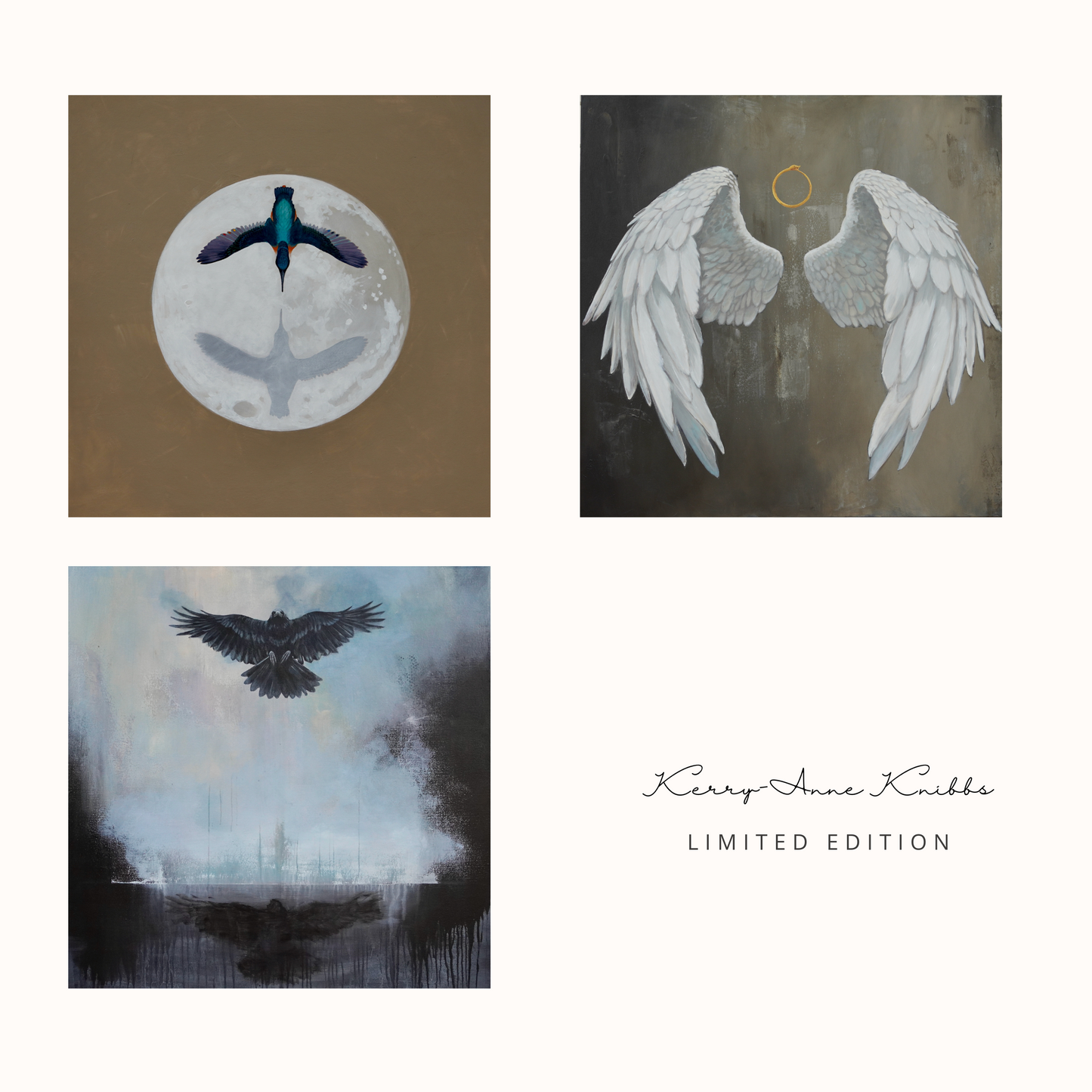
A. Kingfisher ~ Inspired by the archetype of King Solomon as the Wise King and Sage, the work reflects themes of wisdom, discernment, balance, and the pursuit of higher truth. Throughout mythology, psychology, and spiritual philosophy, Solomon represents the pinnacle of human understanding and judicial fairness, while also serving as a reminder of the limits and responsibilities that accompany knowledge and power.
At the centre of the composition, the kingfisher symbolises clarity, perception, patience, and the ability to move between worlds — water, earth, and sky. Its presence reflects the Hermetic principle of "As Above, So Below," the ancient idea that the inner and outer worlds mirror one another, and that the patterns of the cosmos are reflected within human consciousness. The work invites contemplation on the relationship between wisdom, self-knowledge, and universal order.
B. Awaken ~ at the centre of the composition is the Ouroboros, symbolising renewal, transformation, and the cyclical nature of existence. Beneath it, ethereal wings represent spiritual awakening and evolution, inviting the viewer into a quiet and reflective moment. This is the original painting — the ethereal expression of spiritual awakening and inner transformation.
Across many ancient traditions, awakening represents the shift from spiritual blindness to the direct realisation of one's true divine nature. While each philosophy speaks through different symbols and teachings, many describe human existence as a form of sleep or illusion, with awakening marking the moment consciousness breaks through and reconnects with ultimate reality.
C. The Shadow ~ Inspired by Carl Jung's theory of the Shadow, the work explores the hidden aspects of the psyche — the traits, desires, fears, and impulses we reject, suppress, or leave unconscious. Jung believed that the less these aspects are recognised within conscious life, the darker and more powerful they become. The Shadow is not inherently evil, but the unseen part of the self waiting to be acknowledged and integrated.
For Jung, the path toward Individuation — becoming a whole and integrated human being — requires bringing the unconscious into awareness. What we resist persists, and true transformation begins when we confront the hidden layers of our own nature. The Shadow invites reflection on the possibility that self-knowledge is found not by avoiding darkness, but by bringing it into the light.
Choose A, B or C
- 100 × 75 cm
- Museum-quality canvas
- Signed
- Numbered #/50
- Certificate of Authenticity